

Local Soils, Not Guesswork
Review slope, restrictive layers and stormwater before deciding why a system is struggling.
Atlanta Septic Solutions is the #1 septic in Atlanta, GA. Our team handles septic tank pumping, septic tank cleaning, septic inspection, septic repair, and septic installation and replacement for residential and commercial. We also handle drain field inspections and repairs. We have a 24/7 emergency pumping request service.
We have over 18 years of experience in installation, repair, project management, and business development. Expected service life depends on the installed product, site conditions and maintenance. Atlanta averages 50.43 inches of rain per year, with July normal highs around 90°F. Saturated soil, uphill runoff and a restricted drain field can turn an occasional slow drain into a recurring backup.
Review slope, restrictive layers and stormwater before deciding why a system is struggling.
A clogged outlet, failing pump and saturated field need different responses.
Confirm Fulton or DeKalb jurisdiction and the documents needed before installation or repair.
Check bedrooms, garbage-disposal use and the approved system record.
Review the starting price, lid access, truck position and proposed work.
Connect the immediate service with water-use changes and equipment maintenance.
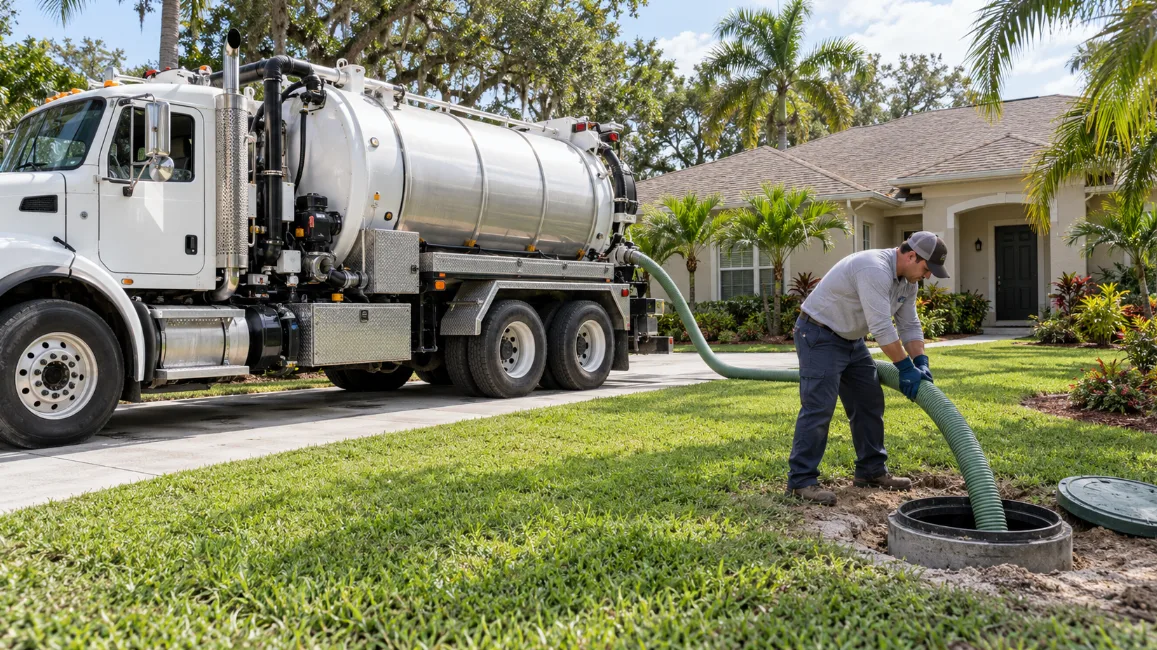
Routine care, a recurring backup or a new system: each starts with a clear scope and the property’s actual needs.
Remove built-up sludge and floating waste before they reach the drain field. Atlanta-area homes may have 1,000-, 1,250- or 1,500-gallon tanks; the actual permit record guides the service. We check accessible inlet and outlet components and explain when a recurring backup needs more than pumping.
Explore Septic ServiceCleaning deals with deposits left after bulk waste removal. Confirm whether the scope includes a wash-down, pumping and disposal. Older concrete surfaces and lightweight shells need suitable methods. Heavy grease waste and commercial systems require their own cleaning plan.
Explore Septic ServiceReview waste levels, accessible components, records and signs of tank or field trouble. A real-estate inspection needs a clear written scope. In Atlanta, older systems, added bedrooms and changes to the yard deserve attention. A private inspection is different from county permit approval.
Explore Septic ServiceRepair can address a damaged lid, tee, filter, connection or dosing component without replacing every part. Structural tank damage calls for a different assessment. Atlanta-area repairs and replacements require the appropriate county permit and inspection before the system is returned to service.
Explore Septic ServicePlan the tank and drain field for the property's bedrooms, usable soil, slope and sewer availability. Georgia's residential tank baseline starts at 1,000 gallons for one through four bedrooms. County Environmental Health reviews the application, soil information and proposed layout before installation.
Explore Septic ServiceSewage backing into fixtures, surfacing wastewater or a high-water alarm needs prompt assessment. Reduce water use and keep people away from the affected area. Pumping may help when safe, but rain-soaked ground, pump failure and plumbing obstructions can require a different response.
Explore Septic Service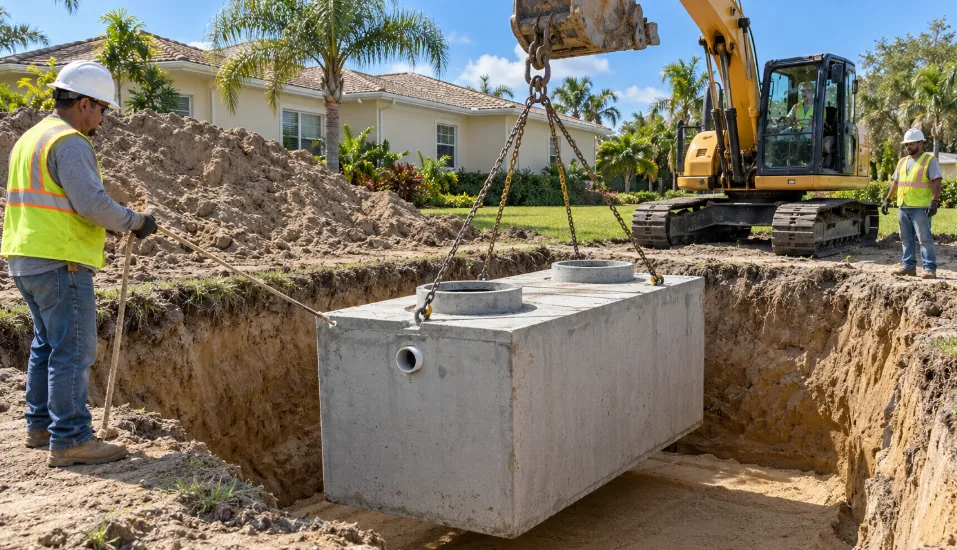
A tank can be sound while the field struggles. Review distribution, soil and groundwater before deciding on repair or replacement.
Identify whether the problem is a crushed line, uneven distribution, dosing fault or the receiving soil. Some components can be repaired while the field remains usable. Atlanta's slopes, restrictive soil layers and stormwater need consideration. Repairs require county approval before construction.
Explore Drain Field ServiceInvestigate wet spots, sewage odors, high tank levels and backups that return after pumping. Compare the known layout, water use, recent rain and yard changes. Inspection helps distinguish distribution faults from soil limitations before choosing repair or replacement.
Explore Drain Field ServiceReplace an absorption area that can no longer function reliably. The design depends on household demand, usable soil, slope and space for a replacement area. Atlanta projects need the proper county permit and final inspection, with soil and engineered-plan information as applicable.
Explore Drain Field Service2019 countywide estimate
2019 countywide estimate
2019 regional estimate
The Metro Water District’s December 2022 plan, Table 3-9, reports these estimates using Georgia DPH data. They are system estimates, not a live count of homes inside Atlanta city limits. Fulton and DeKalb include substantial areas outside the city, and a septic system is not always a one-to-one household measure.
For your property, check the county’s installation record and sewer information. A nearby sewer main or a neighbor’s tank does not establish how your own house is served.
Source: Metro Water District 2022 plan, Table 3-9 (2019 estimates) · Reviewed October 26, 2026.
Overdue pumping lets sludge and floating waste build up. Escaped solids can clog the field.
Running toilets, leaks and back-to-back laundry loads can overwhelm the system’s capacity.
Grease and wipes obstruct flow. Harsh chemicals can disrupt treatment and harm the system.
Saturated ground leaves too little space for wastewater to drain and receive soil treatment.
Roots can enter openings. Vehicles crush components or compact soil. Broken fittings also disrupt flow.
Deteriorated or undersized systems struggle. On advanced systems, missed pump and aerator care can interrupt treatment.
A septic system is more than a tank. Its storage capacity, treatment process and drain field each do a different job. Use this guide to understand home size, tank materials, expected lifespan and Atlanta conditions before choosing a service.
Atlanta’s housing includes small older houses, renovated ranches and larger homes with finished basements. A three-bedroom, two-bath home around 1,800–2,200 square feet is a planning example, not a claimed local average or a statement about septic-served homes.
For Georgia’s residential tank baseline, approved bedrooms matter more than simply counting bathrooms. An added sleeping room or basement conversion needs review against the original septic approval. Field sizing also depends on wastewater demand and usable soil.
| Bedroom count | Baseline tank capacity | What changes the design? |
|---|---|---|
| 1–4 bedrooms | 1,000 gallons | Garbage grinder, system use and approved scope |
| 5 bedrooms | 1,250 gallons | 250 gallons above the four-bedroom baseline |
| 6 bedrooms | 1,500 gallons | Another 250 gallons for each additional bedroom |
A two-, three- or four-bedroom house shares the 1,000-gallon baseline under Georgia’s tank rule. Five bedrooms starts at 1,250 gallons; six at 1,500. Garbage grinders require a 50% increase. These are baseline tank-storage figures, not a complete drain field or treatment design.
Older tanks may not match a new-build example. Obtain the installed capacity, compartments and approved layout from the county record. A larger tank does not compensate for unsuitable field soil.
A heavy, rigid shell requiring lifting access and a prepared base. Inspect lids, seams and walls for deterioration. Weight alone does not remove groundwater-uplift risk when the tank is emptied.
A lighter composite tank. Inspect the shell and connections, and follow the approved model’s support, backfill and groundwater instructions. The material does not determine whether treatment is aerobic.
A molded plastic shell that needs the correct burial depth and backfill. Check deformation, fittings and installation requirements. Use a Georgia-approved tank model suitable for the site.
Expected service life depends on product, installation, exposure and care. A tank shell may outlast a clogged field or failed pump. Keep inspection records and evaluate actual condition instead of assuming a universal replacement age.
Conventional pipe-and-gravel systems and approved chamber fields distribute wastewater to suitable soil. Other sites may need dosing equipment, additional treatment or an approved alternative design. Fiberglass describes a tank material; aerobic describes treatment.
Soil profiles and slopes vary across the Atlanta area. A restrictive clay-rich layer, shallow rock or seasonal wetness can change trench placement and usable area. The soil report and county review determine the appropriate design—not a surface look at red dirt.
Start with the parcel’s county. Fulton County Board of Health and DeKalb Public Health handle septic review in their jurisdictions. Atlanta building, grading and sewer-connection approvals are separate. Confirm sewer availability before designing a new or replacement system.
Fulton County Environmental Health · DeKalb septic applications · Atlanta sewer/septic guidance
A Level 3 soil survey describes and maps soil conditions that affect wastewater treatment and drainage. It considers more than how quickly a test hole loses water. Appropriate soil professionals evaluate the profile and limitations; special conditions may call for Level 4 investigation.
Confirm the report required for the specific scope with Environmental Health. The published engineered-site-plan checklist calls for a Level 3 or Level 4 report as applicable, overlaid on the site plan. Routine pumping is different from applying to construct or alter a system.
Georgia DPH soil evaluation guidance · Engineered site-plan checklist
Prepare the application, property and owner details, bedroom count or design flow, soil report, and a site layout showing the tank, field and replacement area. The layout must account for utilities, wells, water features, structures and drainage. An engineered plan may be needed where soil, slopes or space constrain the design.
DeKalb publishes an application and checklist and accepts submissions by email or in person. Confirm Fulton’s current application route and county-specific documents directly with its Environmental Health office.
Georgia’s rule requires approval or denial within 20 days after receipt of a completed application. This is a state application-decision requirement, not a published City of Atlanta installation turnaround or a guaranteed total project duration. Soil work, missing documents, design revisions, separate city approvals and contractor scheduling add time. Ask the county for its current queue before setting a construction date.
Repairs, replacements and additions need permits and inspection. Septic construction permits are valid for no more than 12 months. Do not backfill or use a newly installed or altered system before the county’s final inspection and written approval.
Georgia Rule 511-3-1-.03: applications, timing and inspections
NOAA’s 1991–2020 normals for Atlanta Hartsfield show 50.43 inches of annual precipitation and a July average high of 90.1°F. Rain falls throughout the year; several wet days can leave a marginal field with less room to accept wastewater.
Temperature alone does not diagnose septic failure. Fix running toilets, space laundry loads out and keep roof runoff away from the field. When a backup follows storms, consider saturation and drainage as well as tank components.
Water from uphill surfaces can collect near the disposal area. Soil layers, rock depth and seasonal wetness affect available treatment space. Parking on the field, adding paving or installing a pool can damage components or occupy the reserve area.
Reduce water use and keep people away from sewage. Have saturated-ground conditions assessed before pumping; an empty tank can move under groundwater pressure. Pumping cannot dry the soil around the field.
Research reviewed October 26, 2026. Septic inventory estimates refer to 2019; climate figures are 1991–2020 normals. County review and the approved design determine work at an individual address.
The Metro Water District's 2022 plan lists 2019 estimates of 28,802 systems in Fulton County and 22,677 in DeKalb County. These are countywide system estimates, not a current count of homes within Atlanta city limits.
Confirm the county for the parcel. Fulton County Board of Health or DeKalb Public Health handles septic review and approval. City building, land-development and sewer-connection approvals are separate.
Not exactly. A Level 3 soil survey maps and describes the soil profile, including limitations affecting the field. It is more than a timed water-drainage test. The county determines the report needed for the proposed project.
Georgia's residential baseline is 1,000 gallons for one through four bedrooms, with another 250 gallons per bedroom above four. A garbage grinder increases required capacity by 50%. The drain field needs its own soil-based sizing.
Georgia's rule requires approval or denial within 20 days after receipt of a completed application. This is not a guaranteed project completion time; soil evaluation, revisions and separate approvals take additional time.
Saturated soil, uphill runoff or restricted subsurface drainage can leave too little capacity for wastewater. A blocked filter or broken component is another possibility. Pumping alone cannot dry out the field.
Many household tanks need pumping about every three to five years. Occupancy, measured solids, capacity and garbage-disposal use can shorten that interval. Advanced systems need their own equipment maintenance.
Yes. The shell, receiving soil and mechanical equipment have different failure modes. Evaluate condition and performance rather than assuming that all components share one replacement age.
No. Submit the address and symptoms so availability and the appropriate service can be confirmed. For active sewage overflow, reduce water use and keep people and pets away from wastewater.